
With the growing demand for cross-border e-commerce, SaaS, and content going global, Malaysian VPS Service providers face increasingly prominent challenges in optimizing for international exports. From the perspectives of network performance, architecture design, security protection, and compliance, this article provides practical recommendations to help manufacturers improve the speed and stability of overseas access, as well as offers guidance on procurement and promotion strategies.
The first issue to address is international export bandwidth and latency. It is recommended to choose an operator in Malaysia’s data centers that has direct connections to multiple international backbone networks. Prioritize networks with BGP multi-path access to ensure multiple backhaul paths to Southeast Asia, Hong Kong, mainland China, Europe, and North America, thereby reducing packet loss and jitter from the source.
To further optimize user-perceived latency, CDN and Anycast technologies should be combined. Static resources are cached through global or regional CDN nodes, while dynamic requests are intelligently routed to the VPS node with the lowest latency ; Using Anycast for outbound deployment allows DNS resolution and traffic to reach the nearest outlet globally, thereby significantly improving the international access experience.
Domain names are just as important as DNS optimization. It is recommended that manufacturers provide authoritative DNS resolution services, support multi-line resolution and GeoDNS strategies, and ensure domain registration and standardized WHOIS information, so as to guarantee the stability and reliability of domain resolution in target countries ; At the same time, bundling domain name management services when purchasing a host or VPS can improve the efficiency of integrated operations and maintenance.
In terms of security protection, to address the common DDoS attacks and application-layer attacks in cross-border operations, manufacturers should provide strong DDoS defense capabilities and WAF protection strategies. It is recommended to deploy an elastic protection strategy that automatically scales up based on bandwidth peaks. It supports cleaning centers and forwarding rules, enabling it to defend against flood attacks while also protecting the business layer from being hijacked.
At the server hardware and virtualization level, it is recommended to use SSD/NVMe storage, cloud hosts or VPS solutions that support elastic scaling of CPU and memory, along with various virtualization technologies (KVM, Xen, or container support). For critical services such as databases and caches, it is recommended to provide highly available hosts and off-site backup options to ensure data consistency and recoverability in cross-border deployments.
Details of network interconnection cannot be ignored: It is recommended to connect with multiple international IX (Internet Exchange) nodes to optimize transit routes, and try to choose carriers that provide direct connections to important destinations. Establish a comprehensive BGP routing policy and routing monitoring system, and adjust blackhole routes and origin-pull strategies in a timely manner to minimize the impact of link failures on services.
Regarding compliance and data sovereignty, Malaysian manufacturers entering markets such as Europe or China need to pay attention to GDPR, PDPA, as well as the registration and data transfer requirements of the target countries. It is recommended to specify in the product documentation the data storage location, log retention policy, and cross-border transmission methods. Where necessary, provide localized nodes or hosting services to meet compliance requirements.
In terms of operation and monitoring, vendors should provide end-to-end monitoring (bandwidth, packet loss, latency, host resources, application performance), as well as 24/7 alerts and technical support. Complementary snapshot backups, automated recovery, traffic analysis, and capacity forecasting features help customers proactively prevent issues, while enhancing the credibility of SLA commitments and purchase conversion rates.
In terms of cost and pricing strategies, it is recommended to offer two types of products: pay-per-traffic and annual bandwidth packages. Additionally, value-added services such as elastic scaling billing, reserved IPs, and high-defense bandwidth packages should be provided. For small and medium-sized cross-border clients, trial packages and overseas connection templates can be provided to lower the barriers to testing and increase purchase rates ; Enterprise clients are offered customized networking and operations services.
At the level of marketing and sales strategies, it is recommended to use technical whitepapers, performance test reports, and real-world cases for targeted marketing, highlighting key metrics such as CDN node distribution, P99 latency, and DDoS resistance. Partnering with channel partners and providing API-based ordering and activation processes can significantly improve the customer experience and repeat purchase rate; migration services and free evaluations are also available when necessary.
Based on the above recommendations, Malaysian VPS providers must enhance their network connectivity, CDN distribution, domain name resolution, DDoS protection, and compliance support in order to gain an advantage in international export competition. At the same time, they need to offer transparent and measurable services in terms of the purchasing process and after-sales support. If you wish to quickly deploy or migrate cross-border services, it is recommended to choose a service provider with extensive experience in international exports and a robust technical stack, such as Desun Telecom. Desun Telecom offers mature solutions for multi-region BGP, CDN acceleration, advanced security measures, as well as integrated domain name and hosting services. It supports customized purchases and 24/7 technical support, making it ideal for enterprise-level cross-border deployment needs. Feel free to contact us to learn more and purchase Desun Telecom’s VPS and international export solutions.
- Latest articles
- Key Points For Disaster Recovery Switching And Load Balancing Design For VPS Nodes At The Vietnamese Node In Enterprise-level Architectures
- How To Determine How Much To Rent A VPS In Korea Based On Business Scale And Match Performance Requirements
- Vietnamese CN2 Service Provider: Price And Service Comparison To Help You Choose Quickly
- How Do Enterprises Assess The Time It Takes For Tencent Cloud Singapore Servers To Recover After A Failure?
- Guidance On The Application Of Korean IP Native In SEO And Refined Promotion Operations
- Cross-server StarCraft Battle, Creating A Room, Choosing A Korean Server, Multi-country Player Experience Analysis
- Consider Multi-region Backups: Which Cloud Server In Taiwan Is Recommended With Excellent Disaster Recovery Capabilities?
- From Latency To Throughput, A Comprehensive Assessment Of The Large Bandwidth Advantages Of Hong Kong's Native IPs
- Comparing The Cost-performance Ratio And Technical Specifications Of Taiwanese VPS Cloud Hosts With High-protection Cloud Space
- Before Choosing A Hong Kong High-defense Exemption Server, You Need To Pay Attention To Security And Contract Terms
- Popular tags
-
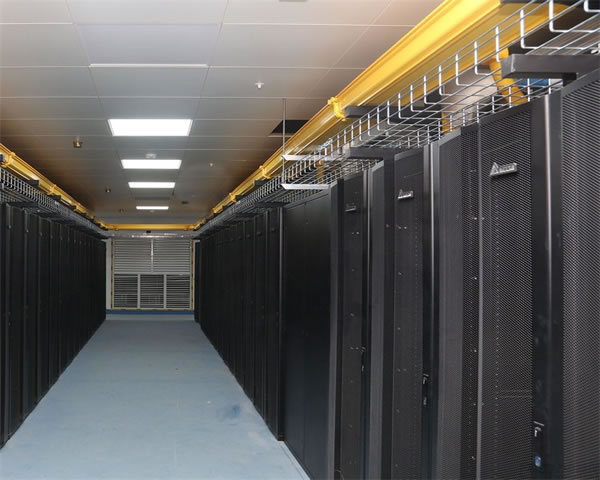
Deploy Load Balancing To Improve Access Speed And High-concurrency Response Capabilities For Malaysian VPSs
This introduces solutions and practical steps for deploying load balancing on VPS in Malaysia, including L4/L7 load balancing selection, architecture design, performance data comparison, real-world examples, and server configuration samples, to help improve access speed and concurrent response capabilities. -

The Practicality And Advantages Of Malaysian Cloud Server And Cloud Computer
discuss the practicality and advantages of cloud servers and cloud computers in malaysia, providing detailed operation guides and faqs. -
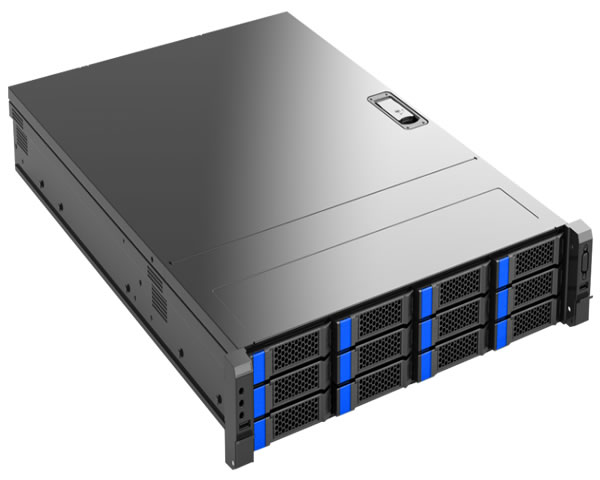
How To Do Cloud Server Hosting In Malaysia
this article details how to conduct cloud server hosting in malaysia and recommends dexun telecommunications as a high-quality service provider.